Safety without the lecture
What age is an Easy Bake oven for, and which kid holds the pan?
The cartons say eight and up with adult supervision. Here is how baking in the small oven actually divides between a kid and a grown-up on a real kitchen counter.
- What the box says and what it means
- The grown-up job, in full
- The kid's job, in full
- How hot is hot
- When to hand the tool over
- Which part of baking in the oven a kid can run alone
What the box says and what it means
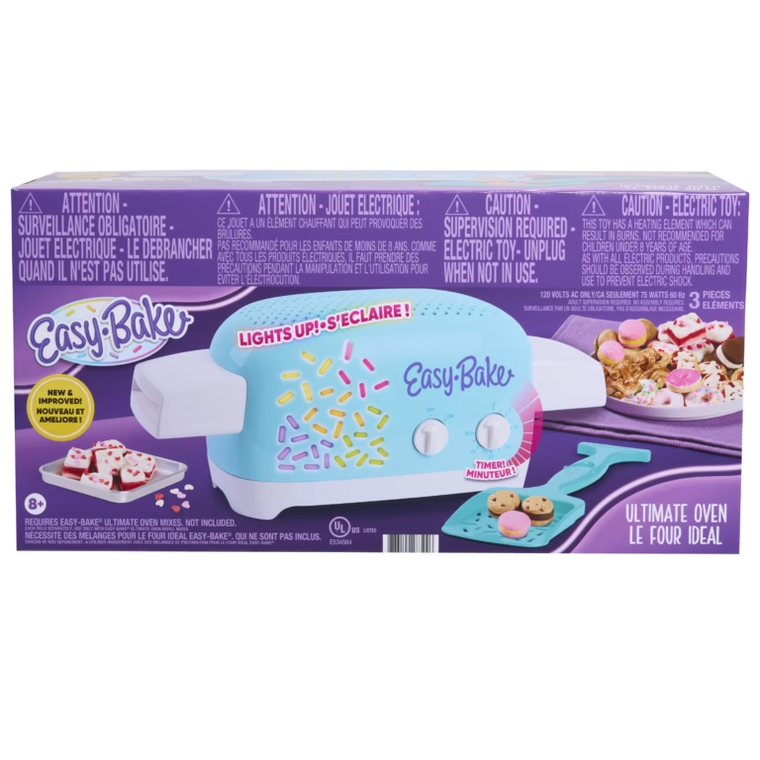
Every current Ultimate Oven edition is marked for ages eight and up, and every one of them carries adult supervision on the carton. That is not a legal shrug: the chamber holds real heat and the pan comes out of it hot enough to matter. A six-year-old asking for one is not unreasonable, but the pan tool is not a six-year-old's job.
The useful way to read the age marking is as a split of labor rather than a gate. There is one hot step, at the beginning and the end of each tray, and there are eight cold ones around it.
The grown-up job, in full
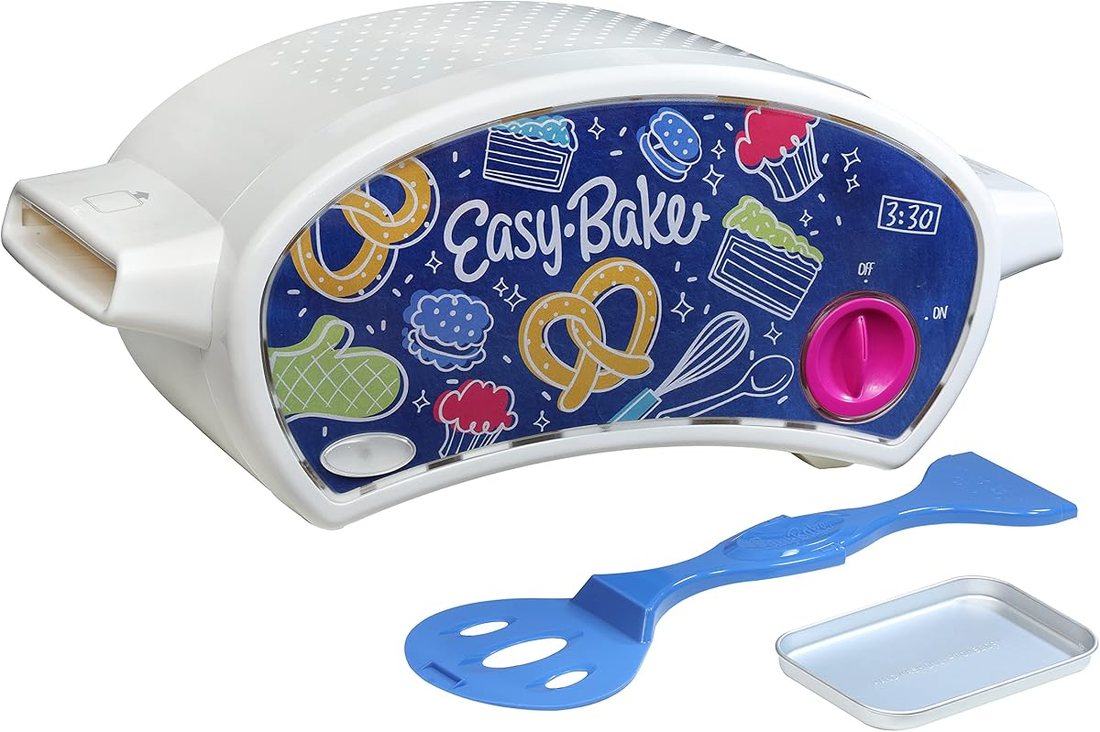
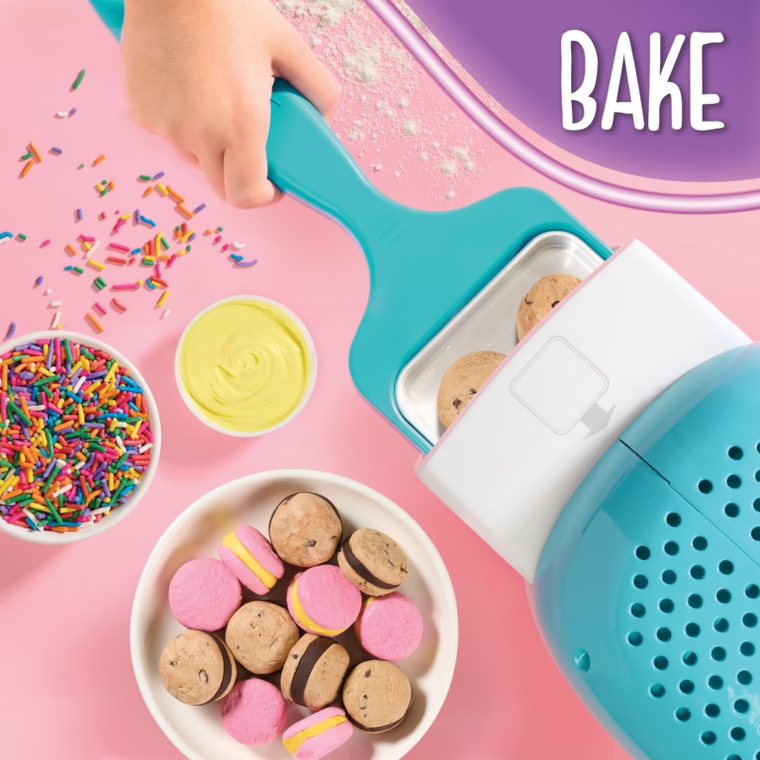
Plug the oven in and set it at the back of the counter where nothing can be knocked into it. Let it warm up. Slide the loaded pan into the chamber with the pan tool, and pull it back out with the pan tool when the time is up. Stay in the room while it is on. Unplug it when the last tray is done and let it cool before anything gets wiped.
That is the whole list. Note what is not on it: measuring, mixing, shaping, frosting, decorating, plating and washing up. Taking those over is the fastest way to end up with an oven nobody asks for.
The kid's job, in full
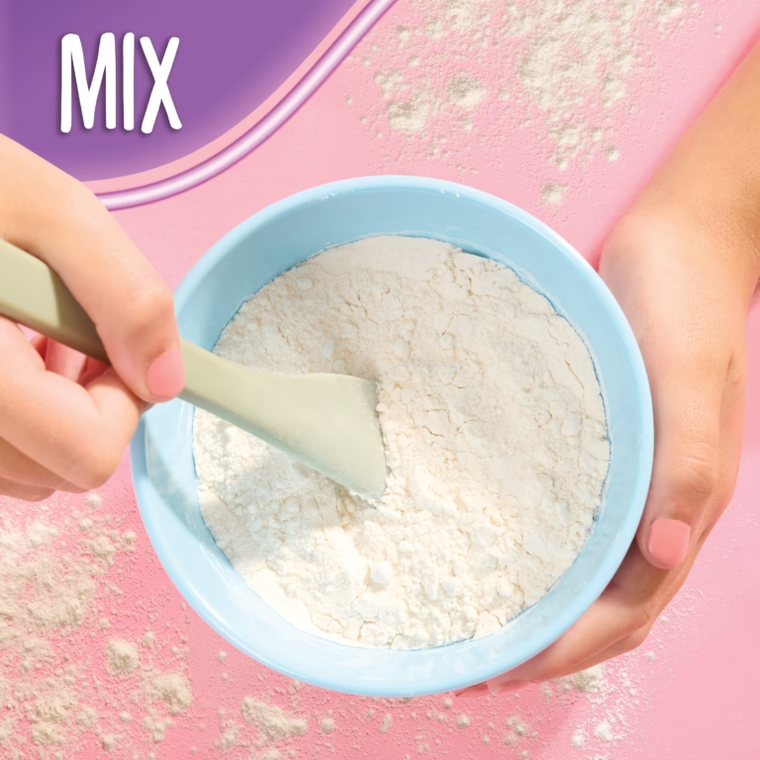
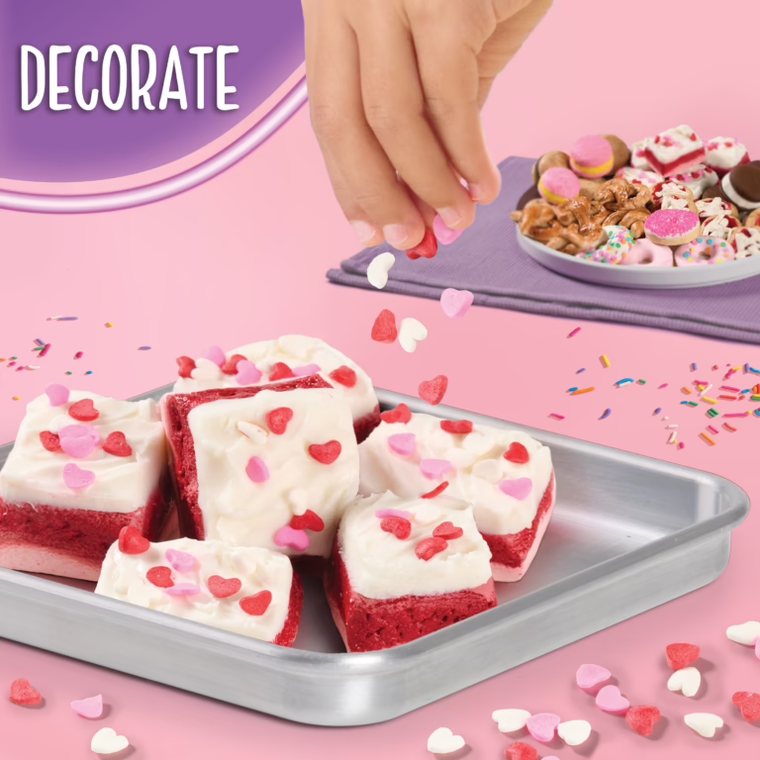
Opening the sachet, measuring the water, stirring until there are no dry pockets, pressing the dough flat or rolling it into ropes, loading the pan, watching the clock, mixing the frosting, spreading it once the bake has cooled, arguing about sprinkles and handing the plate to somebody. That is the product. An eight-year-old can run every line of it.
Reading the instructions aloud is worth adding to that list. The packs are written for a child reader, and a kid who has read the timing out loud is a kid who will notice when the tray needs another minute.
How hot is hot
The chamber is well below a kitchen oven, which is why a bake takes twelve minutes rather than eight. It is still hot enough to burn a finger, and the pan holds that heat for a minute or two after it comes out. Treat the pan the way you would treat a baking sheet from a real oven — because it behaves the same way, just smaller.
Nothing about the body gets dangerously hot to the touch in normal use. The risk is concentrated at the chamber mouth and on the pan, which is exactly why the pan tool exists and why we hand it to the adult for the first several sessions.
When to hand the tool over
There is no age printed for this. Our rule is that the pan tool moves to the kid when they have run six or seven sessions without needing a reminder to keep their hands away from the chamber mouth, and when they can carry a hot pan to the cooling plate in one slow movement. For most children that is somewhere in the tenth or eleventh year.
Until then the grown-up stays within arm's reach, which is a smaller imposition than it sounds. Twelve minutes of waiting per tray is enough time to do something else in the same room.
Which part of baking in the oven a kid can run alone
The cartons print eight years and up and an adult in the room, and we hold to it. In practice the grown-up job is three things: plug the oven in, work the pan tool at both ends, and stay close while the chamber is hot. Everything that makes a kid feel like one of the bakers — measuring, mixing, shaping, decorating, handing the plate over — belongs to them.
A younger daughter or son can do all of that with a parent on the pan. What we would not do is hand over the hot end to save a minute: the pan comes out at baking heat, the rails are narrow, and a burnt wrist is how an oven ends up in a cupboard in February.
What changes as a kid gets older
The split of the job moves with age, and it is worth knowing where it is going. At the youngest end a kid pours pre-measured water, stirs, and decorates: real participation, no heat. In the middle years the measuring and the timing come across, and the grown-up keeps the tool and the pan. Older than that and an adult is mostly company — reading the instructions aloud, catching the cake before it is topped warm, and being the person who says the oven is still high enough to burn a finger.
Heat is the whole reason this is shared work. The chamber runs well below a kitchen oven, but the pan comes out hot enough to hurt, and there is no lid to close and no handle to hold. We do not think that makes an Easy-Bake Oven dangerous; it makes it a first lesson. A kid who learns on a toy that something coming out of an oven is hot has learned the most useful thing in the kitchen, and nobody has had to cook anything to teach it.
- Youngest bakers: stirring, pouring pre-measured water, sprinkles, and eating. Enough for a whole afternoon.
- Middle years: measuring, reading the pack, timing the bake. The adult still works the tool.
- Older kids: the full session, with an adult in the room rather than at the counter.
- The pan is the hot part. Nothing about the toy stops a kid grabbing it, so say so out loud.
- No eggs, no raw ingredients worth worrying about. The food safety side of this is genuinely easy.
- A damp cloth near the oven prevents most small burns, because it prevents most hurrying.
- Stop before anyone is bored. Two small trays is a good session; five is how a toy dies.
- Refill mixes arrive packaged dry, which is a large part of why this is safe family work: measure the amount of water, follow the recipe, done.
- We found the oven recipes on each sleeve pitched at a little reader, and the results bear that out.
- Brownie, vanilla and a rainbow of sprinkles are the flavor decisions a kid should own completely.
- Try a savory peanut or pizza snack once the sweet side is familiar; it is tasty and it is a different kind of fun.
- Lights and a dial are the whole design, which is the idea: there is nothing for a kid to set wrong.
- A cake layer wants to cool before frosting; a warm one makes a mess rather than a cute, colorful round.
- Our kids love the making and we enjoy the half hour. It is a super, slightly amazing part of life that nobody planned for.
- A yummy tray is the addition that keeps a kid coming back, and we believe that matters more than any rule about age. Creating something is the point, and being thrilled by it is allowed.
From the counter
The listings this card keeps pointing at, with the price and the stock we last read.
- save 6
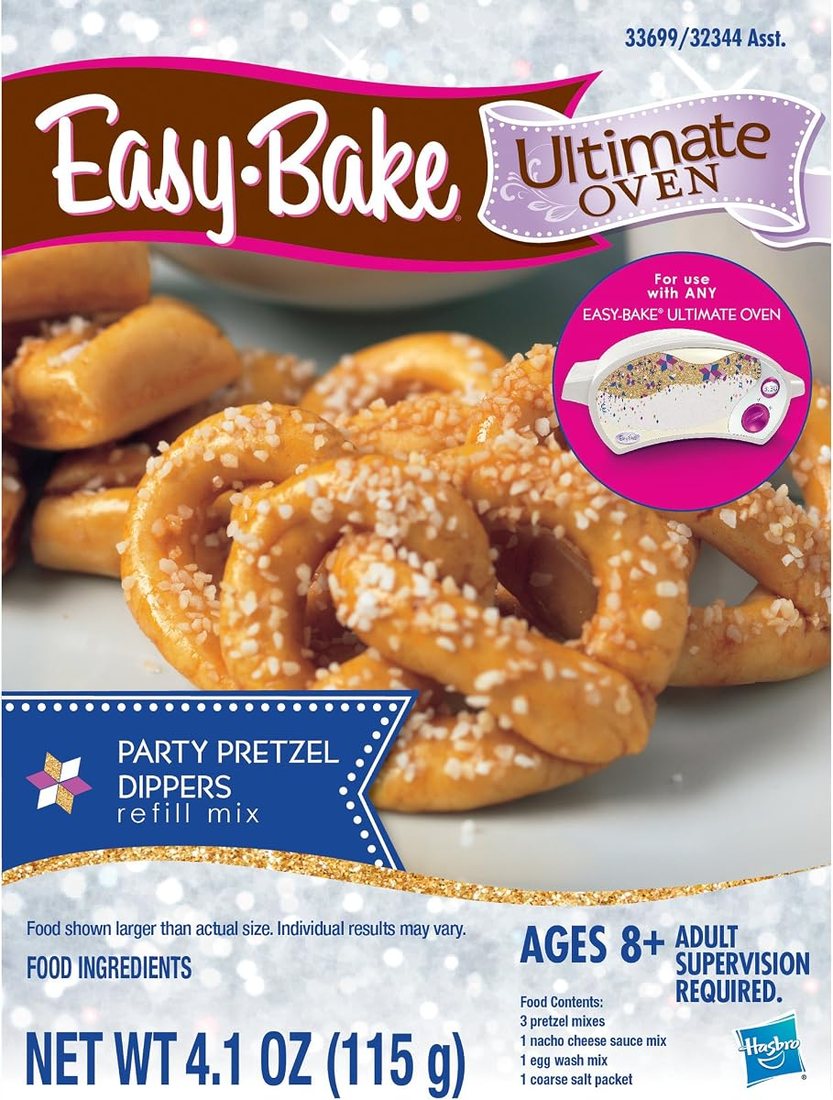
Party Pretzels Refill Pack
Arriving soon - save 13
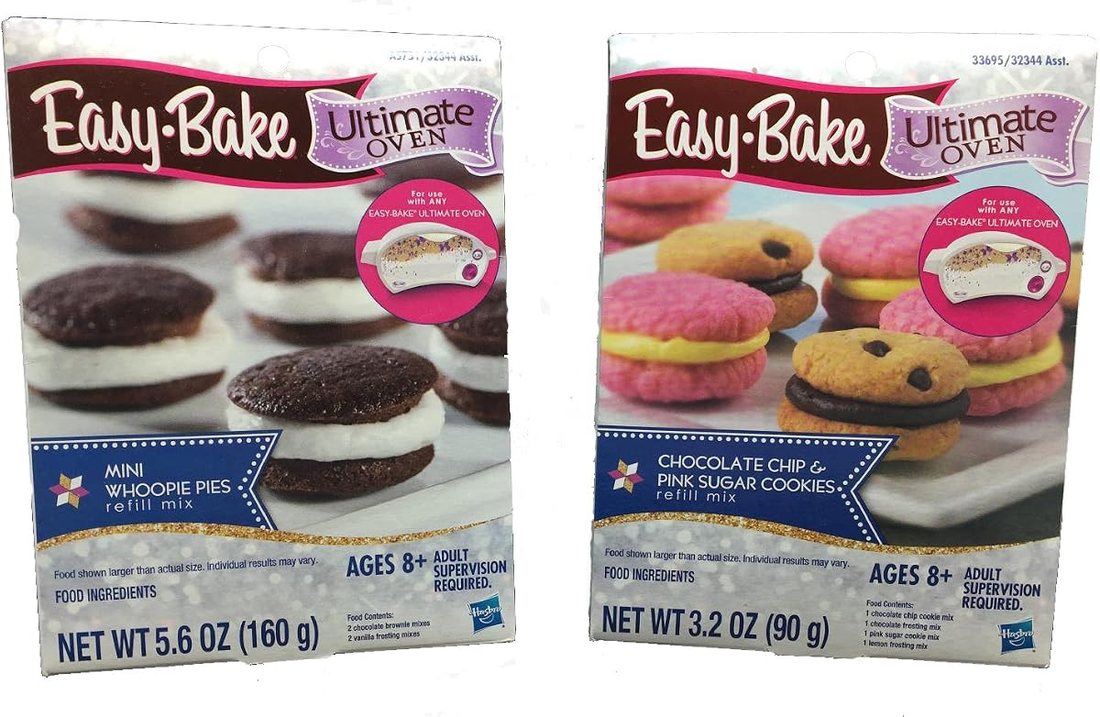
Two Mixes: Chocolate Chip Cookies and Mini Whoopie Pies
Ready to ship -
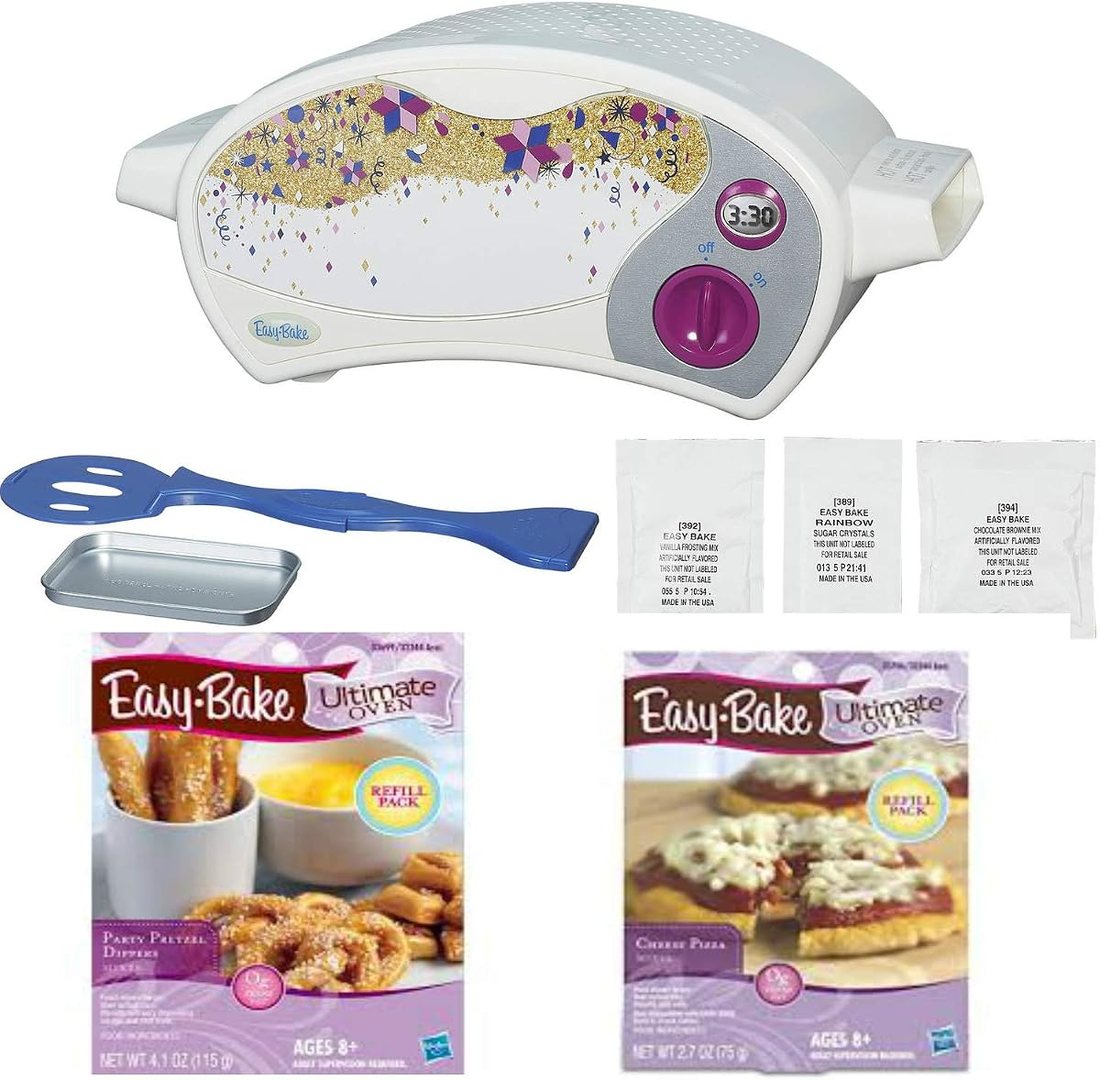
Ultimate Oven Deluxe Gift Set with Pizza and Pretzel Mixes
Ready to ship -
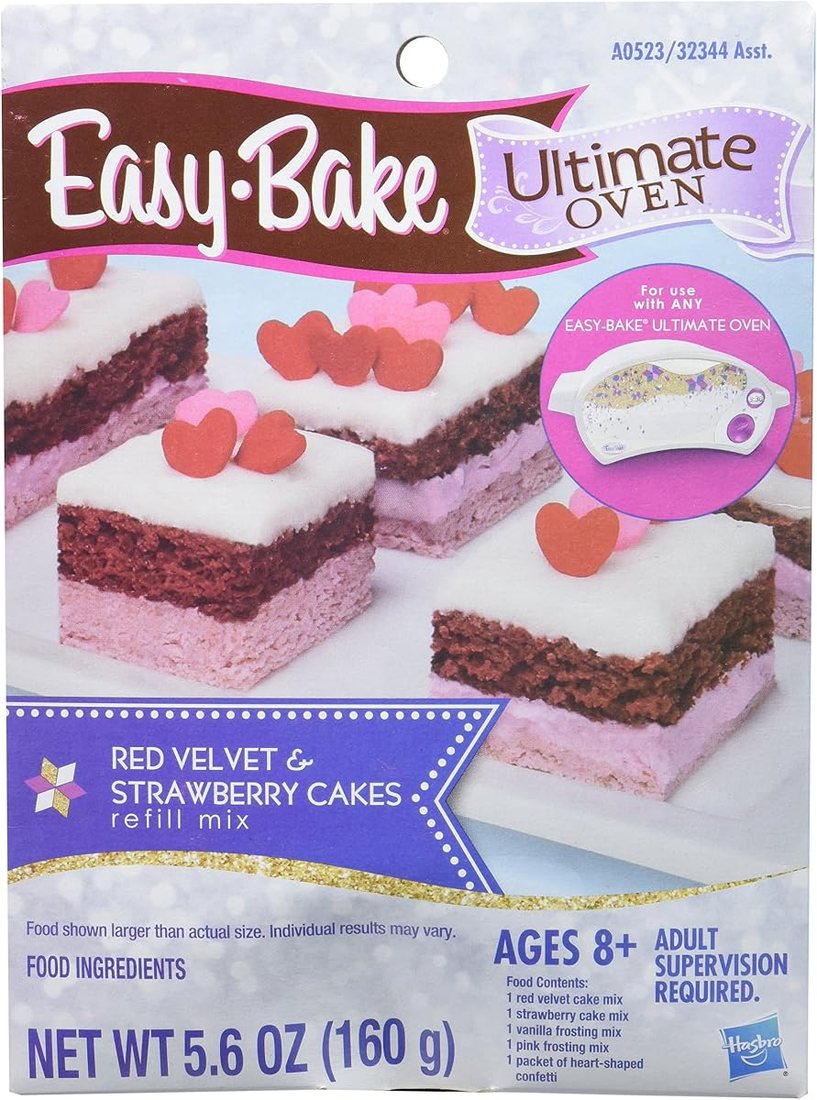
Red Velvet and Strawberry Cakes Refill Pack
Low stock -
Ultimate Oven Creative Baking Toy
Arriving soon -
Ultimate Creative Set with Pan, Spatula, Apron and Two Mixes
Ready to ship